Product Information Management Best Practices: A Practical Guide
Most product data problems start small. A title that reads slightly differently on one retailer. A missing dimension on a spec sheet. An image from last season that nobody swapped out. On its own, none of it feels urgent. But spread across thousands of SKUs, dozens of channels, and a few languages, those small gaps add up fast — and the cost is measurable. In the Shotfarm Product Information Report, 40% of consumers said they had returned an online purchase specifically because of poor product content. And the problem reaches well beyond returns: research from MIT Sloan Management Review estimates that companies lose 15–25% of revenue to poor data quality. At scale, bad product data isn't a content problem. It's a revenue problem.
Product information management best practices are the proven methods for centralizing, governing, enriching, and distributing product data so it stays accurate, complete, and consistent across every channel — from your own website to third-party marketplaces, retailer portals, and AI-powered shopping tools. They fix the problem not by piling on more manual work, but by giving every channel one source of product data it can trust. This guide walks through the practices that matter most — and how to put them into action.
In this article:
What Is Product Information Management?
The Top Product Information Management (PIM) Best Practices
Common Challenges When Adopting PIM Best Practices
Steps for a Successful PIM Implementation
Is PIM Right for Your Business?
Use Case: Getting Accurate Product Data to Every Channel, Faster
How Censhare Supports PIM Best Practices
Frequently Asked Questions
What Is Product Information Management?
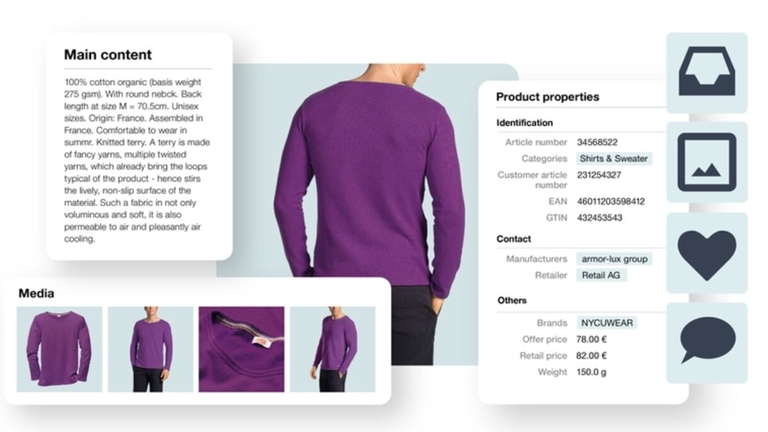
Product information management (PIM) is the practice of keeping all your product data in one central, trusted source and then distributing it to every channel that needs it. That data includes specs, descriptions, categorization, translations, compliance details, and the images and other assets tied to each product.
The point of a PIM system is to act as the single source of truth for product data. Instead of that information scattering across ERP exports, spreadsheets, and people's inboxes, it lives somewhere governed, where it can be reviewed, approved, localized, and sent out to every channel without drifting out of sync. Dedicated PIM software is what makes this workable once you are past a few hundred SKUs.
How PIM relates to master data management
Two related terms are worth untangling. Master data management (MDM) is the broader discipline of governing all of a company's core business data — customers, suppliers, financials, and products. Product master data management is the product-focused slice of that: the authoritative record of what a product is at its most basic level. PIM sits on top of that, turning those raw product records into rich, channel-ready content.
How PIM relates to DAM
A DAM system handles rich media — images, videos, and other assets — but does not manage product data itself. The strongest setups link PIM and DAM together, so the right assets always travel with the right product record, to every channel.
The Top Product Information Management Best Practices
Strong product information management best practices all share one aim: keeping product data accurate, complete, and quick to move. Five areas do most of the heavy lifting.
1. PIM data governance
This is the set of rules, roles, and responsibilities behind how product data gets created and maintained, and everything else rests on it. Give every attribute and category a clear owner. Agree on a consistent data model, including naming conventions, units, and category structures. Enforce validation rules at the point of entry, and treat the PIM as the system of record so stray spreadsheets do not sneak back in. Skip governance and even a capable PIM slowly fills up with conflicting data nobody owns.
2. PIM data quality
Data quality has a direct line to sales, returns, and trust. The National Retail Federation reported that returns reached roughly 16.9% of retail sales in 2024, and inaccurate product information is one of the more preventable reasons behind them. To keep accuracy high, decide what "complete" means for each product category, run automatic checks for missing fields and broken links, and put a visible quality score on each product so the gaps are obvious. Fix and enrich data once, at the source, and every channel inherits the improvement.
3. PIM workflow
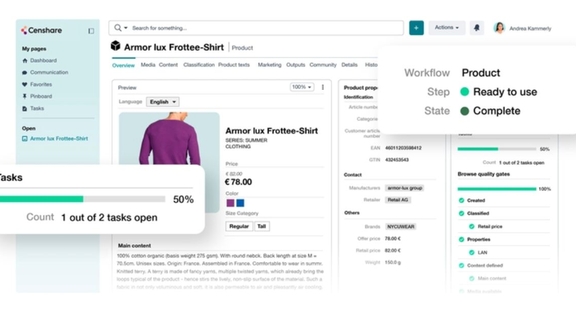
A clear PIM workflow maps how a product travels from raw data to a published listing, and who handles each step. Lay out the lifecycle from onboarding and enrichment through translation, review, and approval. Use visible status stages so it is always clear what is done and what is stuck, automate the handoffs between steps, and keep comments attached to the product instead of buried in an email chain. Done well, this is what lets a small team stay on top of a large, fast-moving catalog.
4. Product data syndication
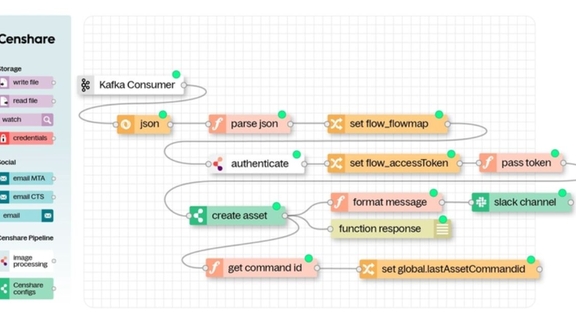
Product data syndication is how information leaves the PIM and reaches the places people actually shop: your own site, marketplaces, retailer portals, and increasingly AI shopping assistants. Get your source of truth clean before you syndicate anything. Map the data to each channel's format and field requirements, automate the distribution rather than exporting by hand, and run translations through the same governed pipeline so a German listing ends up as complete as the English one.
5. PIM ROI
Measuring PIM ROI is a best practice in its own right, because it is how you justify the investment and decide what to tackle next. Track the efficiency you gain (hours saved onboarding and syndicating products), the quality you gain (fewer errors, rejections, and returns), how much faster products go live, and the revenue side (conversion, search visibility, quicker entry into new channels and markets). Capture baseline numbers before you start, then compare. The difference tends to show up sooner than people expect.
Get these five working together and the result follows: more accurate content, on more channels, out the door faster.
Common Challenges When Adopting PIM Best Practices
Putting product information management best practices into place is as much an operational and cultural change as a technical one, and a few things tend to trip teams up.
The data you start with is usually messy. Years of inconsistent information sit across different systems, and it needs cleaning before it moves into the PIM, not after. Ownership is often fuzzy too, and without someone accountable for each attribute and category, governance quietly slips and the old spreadsheet habits creep back. Change management gets underestimated as well. People used to working in their own files need a real reason to switch, which means training and visible wins, not just an announcement.
The last couple of challenges are about scope. Trying to bring every product, channel, and language online at once is a reliable way to overwhelm a rollout. And treating PIM as a one-and-done project, rather than something you maintain, lets data quality slide the moment launch is declared finished. The teams that get this right start small where the impact is highest, and they invest in the people and processes around the software, not only the software itself.
Steps for a Successful PIM Implementation
A PIM rollout works best when it is phased rather than attempted all at once. Starting small keeps you from carrying your existing data mess into a new system, and it lets you prove the approach before you scale it. Here is the sequence that works.
Step 1: Audit your current product data
Map where product data lives today — ERPs, spreadsheets, shared drives, inboxes. Identify who owns what, and be honest about what shape the data is in. This baseline is what everything else builds on.
Step 2: Define your data model and governance rules before loading anything
Agree on a consistent data model: naming conventions, required attributes per category, units of measure, and category structures. Assign clear owners to each attribute and category. Governance decided after the fact is governance that never fully holds.
Step 3: Start focused — one category or one key channel
Pick the highest-impact place to begin: your most important sales channel, your fastest-moving product category, or the area with the most visible errors. Early, contained wins build organizational confidence and surface real-world issues before they scale.
Step 4: Clean and migrate data — without dragging the mess along
Enrich, deduplicate, and validate before you move data into the PIM. A PIM does not automatically fix bad data; it distributes it faster. Fix it once at the source, and every channel inherits the improvement.
Step 5: Build the workflows your team will actually use
Map the product lifecycle from onboarding and enrichment through translation, review, and approval. Automate handoffs between steps. Keep comments and status attached to the product record, not scattered across email threads.
Step 6: Connect your PIM to your channels and systems
Integrate with your ecommerce platforms, marketplaces, retailer portals, and DAM. Automate syndication so content pushes out rather than getting exported by hand. The more channels you sell through, the more essential this becomes.
Step 7: Train your team and measure from day one
Adoption is what makes a PIM investment pay off. Train people properly — not just on the software, but on why the new process works better. Capture your baseline metrics (time to publish, error rates, completeness scores) before you go live, then track improvement. The difference tends to show up sooner than most teams expect.
Step 8: Expand, refine, and keep going
PIM is not a one-time project. Once your first phase is running well, expand to more products, languages, and channels. Review data quality and ROI on a regular cadence — quarterly at minimum — and refine as the business evolves.
Is PIM Right for Your Business?
When does a business actually need PIM best practices?
A business starts to feel the cost of not having them once product data gets complex enough that no single person or team can keep it accurate manually. Common inflection points include: selling through more than two or three channels simultaneously, managing more than a few hundred SKUs, operating across multiple languages or markets, or onboarding products frequently from multiple suppliers. At that scale, inconsistencies compound faster than spreadsheets can catch them — and the resulting errors show up as returns, bad reviews, and lost search visibility. PIM best practices are what let a lean team stay on top of a large, fast-moving catalog without those gaps accumulating.
What does a PIM system do day-to-day?
On a daily basis, a PIM system is where product records get created, enriched, reviewed, and approved before they go anywhere. A product manager logs in to update a spec. A copywriter drafts a description and routes it for approval. A localization team pulls the approved English content and returns the translated version. A workflow automatically flags a record as ready to publish once every required field is complete. An integration pushes the finalized record to your ecommerce platform, marketplace, and retailer portal at once. The PIM makes all of this happen in one place, with one version of the record, rather than scattered across systems that drift out of sync.
How long does a PIM implementation take?
Timeline depends heavily on the volume and complexity of your product data, the number of channels you are connecting, and how clean your existing data is going in. A focused initial rollout — one category, one or two channels, a reasonably clean data set — can go live in two to three months. A full enterprise rollout across multiple markets, languages, and dozens of retailer integrations typically runs six to twelve months. The teams that move fastest are the ones that resist the urge to do everything at once and instead bank early wins in a high-impact area before expanding.
How is PIM different from just using a spreadsheet?
Spreadsheets work when your catalog is small and your channels are few. They break down when you need to manage thousands of SKUs across multiple channels, keep data consistent after it has been updated, enforce completeness rules before anything goes live, or automate distribution to retailers and marketplaces. A PIM system handles all of that — with validation, workflow, permissions, and syndication built in. The real cost of a spreadsheet is not the time spent maintaining it; it is the errors that slip through and the time spent tracking down which version is correct.
Use Case: Getting Accurate Product Data to Every Channel, Faster
BEGA North America, a leading maker of architectural outdoor lighting and furniture, had a product data problem that will sound familiar. Technical information turned out to be inaccurate about 70% of the time, there was no revision control, and the marketing and product teams were pulling from more than 12 separate sources of truth. That left them with constant confusion, plenty of room for human error, and process times that simply were not sustainable.
Working with integration partner Avyre, BEGA brought in censhare's PIM and DAM together, with the ERP connected into the same flow. That gave them one governed source for product data, plus a modular content setup where a single change carries through everywhere it appears, across both product and marketing assets. Spec sheets and product pages that used to take months to build and review started coming together far faster.
The results showed up in the numbers. BEGA went from 70% of products carrying some inconsistency to a single source of truth with current, accurate data, and saved more than 1,500 hours a year across sales and marketing.
"Working with Censhare helped us deliver a better customer experience and achieve faster time to market," Katie Teman, Product Manager at BEGA North America.
Censhare offers PIM software designed to turn these best practices into everyday operations from a single source of truth. Rather than keeping product data, digital assets, and content in separate silos, it brings them together, so governed product information flows out to every channel and market. Governance and quality controls, configurable workflows, and automated syndication all sit in one place.
For more on how this plays out across sales channels, take a look at our related guides on digital shelf management and product content management.
Frequently Asked Questions
What is product information management?
Product information management (PIM) is the practice and system of collecting, enriching, and distributing everything you know about your products from one trusted source, including specs, descriptions, categorization, translations, and linked digital assets. It acts as a single source of truth that keeps product data accurate and consistent across every channel.
What is the difference between PIM and product master data management?
Product master data management is the product-focused part of master data management, which governs a company's core business data. PIM is the layer that turns that authoritative product data into rich, channel-ready content and distributes it. In practice the two work closely together.
What are some examples of product information management in practice?
A few common ones: onboarding a product once and publishing it to a website, marketplaces, and a print catalog from the same record; automatically localizing content for several markets; enforcing completeness rules so nothing goes live missing key specs; and pushing updated images or certifications to every channel automatically when they change.
What are the best practices for integrating PIM with ecommerce platforms?
Connect the PIM to your platforms through APIs or connectors so updates flow automatically, and keep the PIM upstream of the storefront, so content is governed centrally rather than edited in the storefront where it falls out of sync. Map attributes to each platform's schema, sync assets alongside the data, and keep an eye on the pipeline for drift.
How does PIM improve customer experience?
By making sure shoppers see accurate, complete, and consistent product information wherever they look. That reduces uncertainty, builds trust through consistency, cuts returns caused by mismatched expectations, and improves discoverability, including in the AI shopping tools that lean on rich, structured data.
How can PIM improve multichannel content?
It pushes one clean, governed source of product data to every channel in the exact format each one expects, automating the mapping, formatting, and localization so your listings stay consistent and complete across your website, marketplaces, and everywhere else.
What are the benefits of implementing PIM best practices?
Implementing PIM best practices gives you faster time to market, fewer errors and returns, and consistent product information across every channel. Teams spend less time on manual data work, products launch sooner, and the business can scale into more SKUs and markets without the data operation breaking down. Over time, better data also lifts conversion and customer trust, since shoppers see accurate, complete information wherever they find your products.
Monica Mahon
Monica Machon is the Marketing Manager for censhare US. She has been working in marketing for 15 years, overseeing marketing functions and helping SaaS companies design and execute marketing strategies, events, and promotional activities, while enhancing brand positioning and impacting revenue goals.